

BUSINESS STRATEGY / FOUNDER GUIDE

How to Start a Dumpster Rental Business: From First Container to Profitable Fleet

Learn how to start a dumpster rental business, estimate startup costs, understand permits, price rentals profitably, find customers and grow your fleet.

ZH Research Team

Reviewed by Zain Hameed

Date Published

October 27, 2026

ZH Editorial Team

Business Strategy Desk

Five bookings in your first week sound promising. A homeowner needs a renovation dumpster, a roofer needs somewhere for old shingles, and a contractor wants a container at a building site.

Then the bills arrive. One load is heavier than expected, a customer extends their rental, and fuel and landfill charges take a bigger bite than you anticipated.

Owning dumpsters and operating a profitable rental company are different skills. The question isn’t just how many containers you can deliver; it’s whether every rental covers hauling, disposal, equipment and overhead.

If you’re researching how to start a dumpster rental business, think beyond the first truck purchase. Use the Container-to-Cash Framework to connect four decisions: market positioning, fleet and compliance, rental economics, and bookings and operations. Here’s how to build those foundations.

1. Decide What Type of Dumpster Rental Business to Start

Before buying containers, choose whom you’ll serve. A homeowner clearing a garage needs a different rental experience from a roofing crew producing heavy debris every week.

Choose a focused rental model

  • Residential cleanouts: Temporary dumpsters for renovations, landscaping and property clearances.
  • Construction and demolition: Roll-off containers for builders, roofers and approved construction waste.
  • Commercial and contractor accounts: Repeat rentals for property managers, facilities and building teams.
  • Material-specific rentals: Separate containers for concrete, metal or recyclable debris where disposal facilities allow them.
In some markets, common roll-off sizes include 10, 20, 30 and 40 cubic yards. Choose based on site access, likely waste weight and compatible truck capacity—not volume alone. Heavy debris can reach legal weight limits before filling a large container. Research competitors’ prices, rental periods, weight allowances, delivery areas and extra fees. Then call authorized disposal facilities: their accepted materials and tipping fees will determine which bookings make financial sense. A few dependable contractor accounts may be more valuable than an expensive fleet that sits idle. Business consultancy support can help assess local demand and the economics of your chosen niche.

2. Global Dumpster Rental Market Outlook and Growth Opportunities
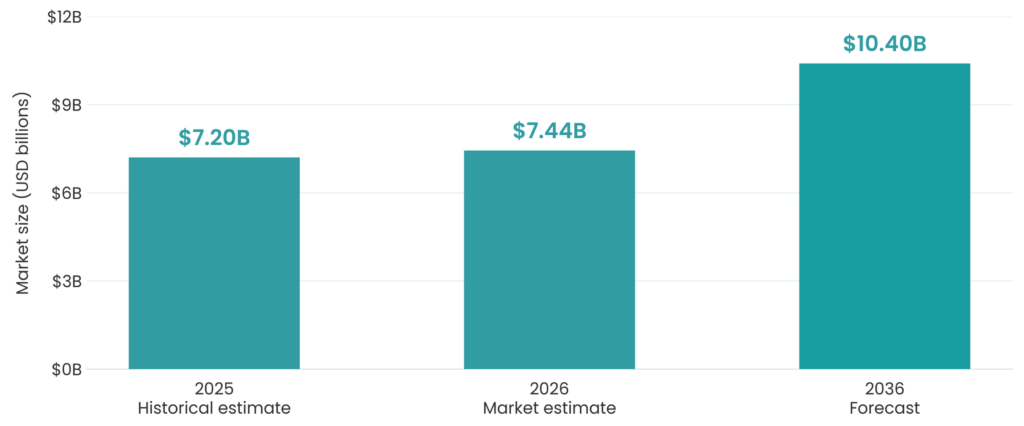
The industry has room to grow, although global forecasts cannot tell you how profitable your local route will be.

According to Fact.MR’s dumpster and roll-off container rental report, the global market was worth approximately $7.2 billion in 2025, is estimated at $7.44 billion in 2026, and is forecast to reach $10.4 billion by 2036—about 3.4% annual growth from 2026 to 2036.

Global Dumpster and Roll-Off Container Rental Market, 2025–2036

Source: Fact.MR, updated June 3, 2026. USD billions; 2025 is a historical estimate, 2026 an estimate, and 2036 a forecast. The figures cover container rentals, including front-load, rear-load and specialty units—not the entire waste-management or dumpster-manufacturing industry.

Fact.MR estimates that construction and demolition waste management accounts for 42.1% of rental-market applications in 2026. Demand also comes from renovations, commercial waste services and projects needing separated recycling containers.

For an independent operator, the opportunity is practical: target busy construction areas, offer clear online quotations and reduce empty trips. Rising landfill fees, unreliable disposal access or long delivery distances can offset industry growth. Local utilization and cost control matter more than headline market size.

3. Licensing, Equipment, Insurance and Startup Costs

Dumpster rental combines equipment hire, commercial transport and waste handling. The rules depend on your country, vehicle and waste categories, so confirm them before taking bookings.

Check permits and safe disposal requirements

Potential requirements include business registration, waste-carrier permits, commercial vehicle and driver authorizations, container-placement permits and approved storage arrangements.

For example, businesses carrying other people’s waste in England generally need waste-carrier registration. In the United States, commercial driver’s licence classifications depend on vehicle configuration and weight. Neither example is a worldwide rule.

Arrange suitable motor, liability and equipment insurance. Confirm which loads your disposal partners accept and establish a written prohibited-materials policy, particularly for hazardous or otherwise restricted waste

Budget for a practical starting fleet

A modest owner-operated roll-off company might begin with a compatible used truck and four containers:

Illustrative startup expense USD
Used roll-off truck $70,000
Four compatible dumpsters $16,000
Registration and permits $1,800
Initial insurance allowance $6,500
Storage yard setup and deposit $3,000
Safety equipment and accessories $2,200
Website, software and marketing $1,000
Working capital reserve $15,000
Illustrative total $115,500

Hypothetical planning budget, not verified market averages or vendor quotes. It assumes an owner-operated model and excludes major unexpected truck repairs. Financing or subcontracted hauling changes both upfront investment and ongoing costs.

Don’t use all available cash on equipment. Fuel, tipping fees, repairs and insurance still need paying when bookings slow down.

4. Create a Dumpster Rental Business Plan and Set Profitable Prices

A $550 rental looks attractive until the disposal receipt arrives. Knowing how to start a dumpster rental business means understanding profit per completed rental, not just revenue per container.

Your business plan should identify target customers, equipment capacity, monthly rental volume, disposal partners, expected expenses and the cash needed between payments.

Work through one rental's economics

Suppose you charge $550 for seven days, including up to two US short tons of accepted waste:

Illustrative rental calculation USD
Customer rental fee $550
Disposal: 2 short tons × $65 −$130
Delivery and collection labor: 4 h × $25 −$100
Fuel and truck operating costs −$70
Container depreciation and maintenance −$40
Allocated insurance, yard and overhead −$65
Payment processing −$15
Contingency −$30
Remaining before tax and other costs $100

Illustrative assumptions, not a market-rate benchmark. The $100 balance equals approximately 18.2% of revenue and is not guaranteed net profit.

Set out the rental duration, delivery radius, permitted materials, included disposal weight and clearly explained fees for excess weight, longer rentals or extra collection trips. Use disposal tickets to support weight-based charges.

Never accept a load that exceeds vehicle or road limits, even if a customer offers to pay more. Track how often each container rents and how long it waits for collection. A busy container is useful only when its bookings cover the full operating cost.

5. Build Safe and Efficient Dumpster Rental Operations

Every avoidable trip erodes your margin. Create a repeatable workflow:

Enquiry → Waste Check → Quote → Booking → Site Assessment → Delivery → Collection → Authorized Disposal → Inspection and Invoice

Control each handoff

Before delivery, confirm access, ground conditions, clearance, permitted placement and who will keep the container accessible. Drivers need appropriate licences, load-securing procedures and a safe plan for lifting and transporting each container.

Make prohibited materials and weight limits clear before the customer starts loading. Use authorized facilities and retain weighbridge tickets, disposal receipts and any required waste-transfer documentation.

Inspect containers for damage or faulty doors; follow scheduled truck maintenance rather than waiting for a breakdown. Remove unsafe equipment from service.

Measure profit per booking, utilization, disposal cost per load, empty mileage, breakdowns and late collections. Booking software can help coordinate deliveries and exchanges, but it can’t compensate for inadequate vehicles or trained staff.

Expand only when you can reliably service additional containers without losing control of costs or safety.

6. Find Customers and Grow Your Dumpster Rental Business

Most customers don’t browse dumpster rental sites for entertainment. They search when a renovation, roof replacement or cleanout creates an immediate need.

Make booking straightforward

A professional website should explain container sizes, service areas, accepted waste, included weight, rental terms and how to request a quotation. Clear pricing rules reduce disputes and save time on calls.

Use location-specific service pages and an accurate Google Business Profile where eligible. Genuine reviews reinforce reliability, particularly for homeowners booking their first dumpster.

Build repeat business

Approach roofing crews, builders, renovation contractors, estate-clearance companies and property managers. They value responsive delivery, predictable exchanges and transparent disposal charges more than promotional slogans.

A focused digital marketing strategy can combine local SEO, targeted search advertising and contractor referrals. Track not just enquiries but confirmed rentals, customer acquisition cost and contribution after hauling and disposal.

Avoid advertising more inventory than you can deliver. Dependability is often your best sales tool.

7. Common Dumpster Rental Business Startup Mistakes

Most dumpster rental mistakes begin with assumptions that haven’t been tested. A container may sit idle despite strong demand elsewhere, while underestimated tipping fees or collection trips erase the margin on another booking. Overloaded containers, unclear agreements and missed pickups can also create safety risks, disputes and unexpected expenses. These problems often compound as a fleet grows. Identifying them early helps protect cash flow, reliable service and the decisions you make about expansion.
  • Buying too much equipment too early: Unused containers tie up capital without producing rental income.
  • Underpricing disposal: Heavy loads, tipping fees and extra journeys can erase margins.
  • Accepting prohibited or overweight loads: Rejected waste and unsafe transport create financial and regulatory exposure.
  • Using vague rental agreements: Specify placement, pickup access, allowed materials, extensions and charges.
  • Growing without dispatch systems: More bookings don’t help if missed pickups and vehicle downtime damage service.
A disciplined small fleet is often stronger than a larger, poorly utilized one.

The Takeaway

Learning how to start a dumpster rental business means building a logistics operation—not simply buying steel containers.

Return to the Container-to-Cash Framework: market positioning → fleet and compliance → rental economics → bookings and operations. Choose customers carefully, use lawful disposal partners, know your true costs and keep containers moving efficiently.

If you want support with startup forecasts, fleet investment decisions or a credible commercial plan, ZH Consultancy can help turn your assumptions into a practical growth strategy

Faq

Frequently Asked Questions About Dumpster Rental Business

How much does it cost to start a dumpster rental business?

Our $115,500 illustrative budget covers a used roll-off truck, four containers, startup administration, insurance and working capital. Actual costs vary widely, and hiring a qualified hauler may reduce initial vehicle spending.

Do I need a licence to rent dumpsters?

Possibly several. Waste-carrier registration, truck and driver authorizations, business permits and permissions for placing dumpsters on public roads depend on your jurisdiction and activities.

Is a dumpster rental business profitable?

It can be, provided prices cover hauling, tipping fees, insurance, staff, maintenance, overhead and equipment replacement. Container utilization and disposal costs are especially important.

How many dumpsters should I buy first?

Begin with a manageable number of containers that fit your truck and customer demand. Expand after tracking actual bookings, turnaround time and cash flow.

Can I start without owning a roll-off truck?

Some operators partner with properly qualified, insured haulers. Confirm responsibilities, pricing and legal requirements in a written agreement before marketing rentals.

How do I find dumpster rental customers?

Use a clear website, local search visibility, genuine reviews and partnerships with roofers, builders and property managers. Reliable delivery and collections encourage repeat bookings.

Portrait of Zain Hameed
Read & reviewed by

Zain Hameed

CEO · ZH Consultancy

Business strategy specialist helping a global client base of 800+ businesses build credible plans, financial models and investor-ready presentations.

4.9/5 Upwork rating
800+ Businesses worldwide
4.8/5 PeoplePerHour rating

Book a Free Consultation

Have a business idea, growth challenge or investor deadline? Book a free consultation and get clear next steps from our team.

Call our team

+923104049517

Untitled design (2)

Business topics

Continue reading

Related insights