

In this article
Imagine landing a $3,000 interior design project. The client loves your initial concept. Then come three extra rounds of revisions, a delayed furniture order and hours of unpaid supplier calls. The room may look beautiful, but your profit is disappearing.
That’s the challenge behind how to start an interior design business: creative ability is only half the job. You must also choose the right clients, define your services, protect your time and manage projects commercially.
Use the Concept-to-Contract Framework to stay focused: market positioning (who you serve), professional credibility (what you’re qualified to deliver), project economics (what each assignment really earns) and client acquisition and delivery (how you win and complete work). Here’s how those decisions fit together.
1. Decide What Type of Interior Design Business to Start
A residential bedroom refresh and a restaurant redesign demand different skills, budgets and timelines. Choosing a focus early makes your portfolio, prices and marketing more convincing.
Choose services that fit your expertise
- Residential design: room layouts, finishes, furniture selection and renovation concepts.
- Commercial design: offices, hospitality, retail and other business interiors, often with more technical coordination.
- Online design: remote consultations, mood boards, shopping lists and digital room concepts.
- Styling and decorating: furniture, color and accessories without regulated architectural or engineering work.
- Specialist services: small-space design, accessible interiors, sustainable materials or another clearly defined niche.
Start with a manageable offer rather than promising complete renovations before you have the necessary experience and professional partners.
Know who you’re designing for
A homeowner might want a practical room transformation at a predictable fee. A property developer may prioritize consistent specifications and deadlines. Interview prospective clients, review competing studios’ portfolios and look for gaps in their service or communication.
If you lack paid work, showcase clearly labelled concept projects rather than presenting renderings as completed commissions. For help evaluating a niche, explore ZH Consultancy’s business advisory services.
2. Global Interior Design Market Outlook and Growth Opportunities
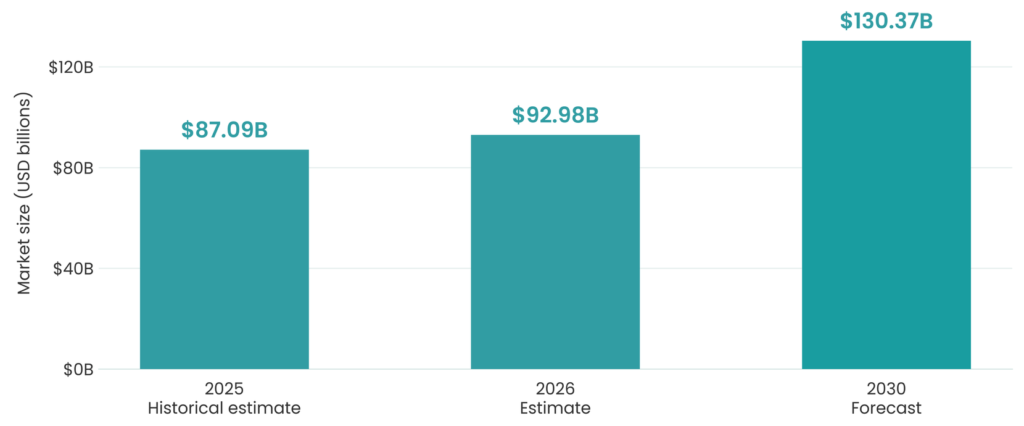
Global demand provides useful context, but it won’t tell you whether a particular city has enough clients willing to pay your fees.
The Business Research Company’s September 2026 report estimates the global interior design services market at $87.09 billion in 2025, rising to $92.98 billion in 2026 and forecasting $130.37 billion by 2030. The increase from 2026 to 2030 implies roughly 8.8% compound annual growth.
Global Interior Design Services Market, 2025–2030
Source: [The Business Research Company, Interior Design Services Market Report 2026](https://www.thebusinessresearchcompany.com/report/interior-design-services-global-market-report). USD billions; 2025 historical estimate, 2026 estimate, 2030 forecast. The market definition includes related goods sold within a design service—not the entire standalone furniture or home décor retail market.
Where opportunities are emerging
- Renovation and property development create demand for layouts, refurbishment concepts and commercial interiors.
- Virtual consultations let small studios serve clients without maintaining a showroom.
- Sustainable, energy-conscious spaces encourage thoughtful material and product selection.
- 3D visualization and digital presentations help clients understand designs before approving purchases.
3. Qualifications, Licensing, Tools and Startup Costs
An interior design business can begin from a home office, but the right qualifications and operating safeguards depend on your location and scope of work.
Understand professional boundaries
Some jurisdictions regulate interior design titles or particular professional activities. The Council for Interior Design Qualification explains regulated jurisdictions and NCIDQ requirements in North America. Rules elsewhere differ, so confirm requirements with your local authority.
Decorating, furniture selection and concept presentations are not automatically equivalent to preparing regulated technical drawings. Structural alterations, certain building plans and code-sensitive work may require authorized architects, engineers or other professionals. Arrange appropriate business registration, written agreements and insurance, including professional liability where relevant.
Budget for the essentials
Start with a reliable computer, suitable floor-planning or visualization software, measuring tools, samples, client presentation templates and invoicing systems. Choose subscriptions based on the jobs you actually sell.
| Startup expense | Illustrative USD |
|---|---|
| Registration and initial credentials | $500 |
| Computer upgrades and design software | $1,500 |
| Samples and measuring tools | $350 |
| Website, branding and portfolio | $700 |
| Initial business insurance | $850 |
| Legal, accounting and administration | $600 |
| Working capital reserve | $2,500 |
| Total illustrative startup budget | $7,000 |
Hypothetical planning figures, not market averages. Excludes studio rent, a degree, staff and client furniture or construction purchases.
Keep sufficient cash for software, travel and production work while client payments are outstanding. A glamorous office is optional; reliable delivery isn’t.
4. Create an Interior Design Business Plan and Price Projects Profitably
Understanding how to start an interior design business also means treating your creative hours as a real cost. A high design fee can still produce disappointing profit when revisions multiply.
Map out the business model
Define your target client, core packages, expected project capacity, recurring expenses, lead-generation channels and payment terms. Forecast conservative monthly sales rather than assuming every enquiry converts. ZH Consultancy’s business plan services can help turn those assumptions into a practical financial plan.
Designers may use hourly rates, room-based packages, fixed project fees or retainers. A fixed fee gives clients certainty but should state what drawings, meetings and revision rounds are included. Price purchasing, supplier coordination and site visits separately where appropriate.
Example: a $3,000 design package
| Revenue or expense | Illustrative USD |
|---|---|
| Client design fee | $3,000 |
| Design work: 30 hours × $45 | −$1,350 |
| Meetings and revisions: 8 hours × $45 | −$360 |
| Freelance 3D visualization | −$250 |
| Travel and material samples | −$140 |
| Business overhead allocation | −$320 |
| Remaining before taxes and other costs | $580 |
Illustrative assumptions; the $45 rate represents the cost of the designer’s time, not an additional client charge. Furniture, renovations and taxes are excluded.
The $580 remainder is 19.3% of revenue—and additional unpaid revisions would reduce it. Use a written scope, defined approvals and change fees. Where lawful and suitable, request an initial retainer and milestone payments so you aren’t financing every project yourself.
5. Build Professional Interior Design Operations
A design studio succeeds when clients enjoy the process as much as the final room. A repeatable workflow protects timelines, budget and trust.
Enquiry → Discovery call → Written brief → Proposal and contract → Concept → Client approval → Detailed selections → Delivery and follow-up.
Document each client’s preferences, functional requirements, spending limit and decision-makers. Use mood boards, layout drawings and sample schedules to communicate ideas before orders are placed.
Prevent avoidable project problems
Set revision limits and record approvals. Confirm supplier specifications, lead times, cancellation terms and who is responsible for placing orders. If a client requests changes after approval, explain their cost and scheduling impact in writing.
For renovations, coordinate construction and technical decisions with appropriately qualified professionals; don’t promise approvals or completion dates you can’t control.
Track estimated versus actual design hours, outstanding invoices, supplier delays and client feedback. Once the workflow is stable, outsource defined tasks such as 3D visualization before adding permanent overhead.
6. Find Clients and Grow Your Interior Design Business
Your best marketing asset is evidence that you can solve a client’s design problem—not simply a feed of attractive images.
Turn your portfolio into enquiries
Show strong project photography, before-and-after comparisons where permitted, and short explanations of the brief, constraints and outcome. Clearly label speculative concepts. A professional portfolio website should outline packages, service areas, relevant experience, testimonials and an easy way to book a consultation.
Share practical design advice and project stories on Instagram and Pinterest. For local services, optimize relevant website pages and maintain an accurate Google Business Profile where eligible.
Build professional referral networks
Connect with architects, renovation contractors, property managers, real estate professionals and furniture suppliers. Reliable communication can make your studio a preferred referral partner.
A focused digital marketing strategy can combine search visibility, portfolio content and targeted advertising. Measure qualified enquiries, proposal acceptance, client acquisition cost and profit per project—not followers alone.
7. Common Interior Design Business Startup Mistakes
- Working without a written agreement: define fees, deliverables, approvals and ownership or use of design materials.
- Underestimating creative hours: include research, meetings, revisions, administration and software in your rates.
- Offering unlimited revisions: put an allowance in your proposal and charge for significant changes.
- Ordering without approvals: confirm client funding, quantities, specifications and supplier terms first.
- Serving everyone at once: build a focused portfolio and dependable process before expanding your offer.
The Takeaway
Learning how to start an interior design business requires more than taste and technical creativity. It calls for a focused market, credible services, thoughtful pricing and repeatable delivery systems.
Return to the Concept-to-Contract Framework: Market Positioning → Professional Credibility → Project Economics → Client Acquisition and Delivery. Build each part deliberately and your portfolio can become the foundation of a sustainable studio.
If you’re evaluating a launch or expansion, ZH Consultancy can help assess startup costs, develop financial projections and structure a practical growth plan.
Faq
Frequently Asked Questions About Interior Design Business
Costs vary by location and model. A home-based studio may start with several thousand dollars; our $7,000 example excludes rent, staff and client purchasing, so it is not a universal benchmark.
Not for every service or jurisdiction. Regulated professional titles and technical work may require education, certification or registration. Check the laws where you operate.
Yes, especially for consultations and digital concept packages. Confirm local business, insurance and client-meeting requirements.
Hourly, fixed-fee, room-based and retainer models can all work. Choose according to scope, project uncertainty, revisions and your cost base.
Create honest concept examples, build a focused website, share helpful work and network with property professionals. Never represent an unbuilt rendering as a completed commission.
It can be when fees cover design hours, contractors, overhead, revisions and collection delays. Calculate profit for each project, not just revenue.
Zain Hameed
Business strategy specialist helping a global client base of 800+ businesses build credible plans, financial models and investor-ready presentations.
In this article
Book a Free Consultation
Have a business idea, growth challenge or investor deadline? Book a free consultation and get clear next steps from our team.
Call our team
+923104049517
Email us
Business Topics
Business topics
Continue reading
Related insights

How to Start a Dumpster Rental Business: From First Container to Profitable Fleet
Learn how to start a dumpster rental business, estimate startup costs,

How to Start a Bounce House Business: From Weekend Rentals to a Profitable Company
Learn how to start a bounce house business, estimate startup costs,

How to Start an Interior Design Business: From Creative Talent to Profitable Studio
Learn how to start an interior design business, understand qualifications, estimate

How to Start an Electrical Business: From Skilled Electrician to Profitable Contractor
Learn how to start an electrical business, understand licensing, estimate startup

How to Start a Window Cleaning Business: From First Job to Profitable Company
Learn how to start a window cleaning business, estimate startup costs,

How to Start a Security Business: From First Contract to Profitable Company
Learn how to start a security business, understand licenses, calculate guard