
BUSINESS STRATEGY / FOUNDER GUIDE

How to Start an Electrical Business: From Skilled Electrician to Profitable Contractor

Learn how to start an electrical business, understand licensing, estimate startup costs, price jobs profitably, find customers and grow your company.

ZH Research Team

Reviewed by Zain Hameed

Date Published

October 27, 2026

ZH Editorial Team

Business Strategy Desk

A $2,000 electrical installation sounds like a good job—until you discover the materials cost more than expected, the electrician needed another day and the customer has not paid.

You may have delivered excellent work. But did the business actually make money?

That is the challenge behind how to start an electrical business. Technical skill gets the installation completed; business skills determine whether you can quote accurately, meet legal requirements, manage cash flow and keep customers coming back.

Think of the Wiring-to-Wealth Framework as four connected priorities:

Market positioning: Choose electrical services and customers you can serve well.

Qualifications and compliance: Meet licensing, safety and insurance obligations before accepting work.

Job economics: Price materials, labour, overhead and risk—not just your time on-site.

Customer acquisition and operations: Win suitable projects, deliver them consistently and collect payment.

Electrical contractors can find opportunities in repairs, renovations, commercial maintenance and newer infrastructure. The opportunity becomes a business only when those four priorities work together.

1. Decide What Type of Electrical Business to Start

Before purchasing specialist tools or advertising services, decide what work your company will actually perform. Residential fault-finding, commercial maintenance and new-build electrical installation demand different equipment, schedules and financial capacity.

Possible niches include residential repairs and lighting, commercial installation, planned maintenance, construction subcontracting and specialist work such as EV charger or solar electrical installation. Offer specialist services only with the required qualifications and approvals.

Choose a customer, too. Homeowners may prioritize prompt, trustworthy repairs; building managers often want scheduled service and clear documentation. Builders value contractors who meet deadlines and coordinate with other trades.

Study competing firms’ reviews, service areas, quotation processes and specializations. Repeated complaints about missed appointments or unexpected charges may reveal a positioning opportunity.

If the numbers or market choice are unclear, ZH Consultancy’s business consultancy services can help evaluate commercial feasibility before you invest.

Start with work you can deliver safely and profitably—not every service an electrician might offer.

2. Global Electrical Services Market Outlook and Growth Opportunities

Worldwide demand offers useful context, although it cannot guarantee customers in your service area.

The Business Research Company’s Electrical Services Market Report, published in September 2026, estimates the global electrical services market at $264.36 billion in 2025, $280.50 billion in 2026 and forecasts $358.71 billion in 2030—approximately 6.3% compound annual growth from 2026 to 2030.

Global Electrical Services Market Forecast, 2025–2030
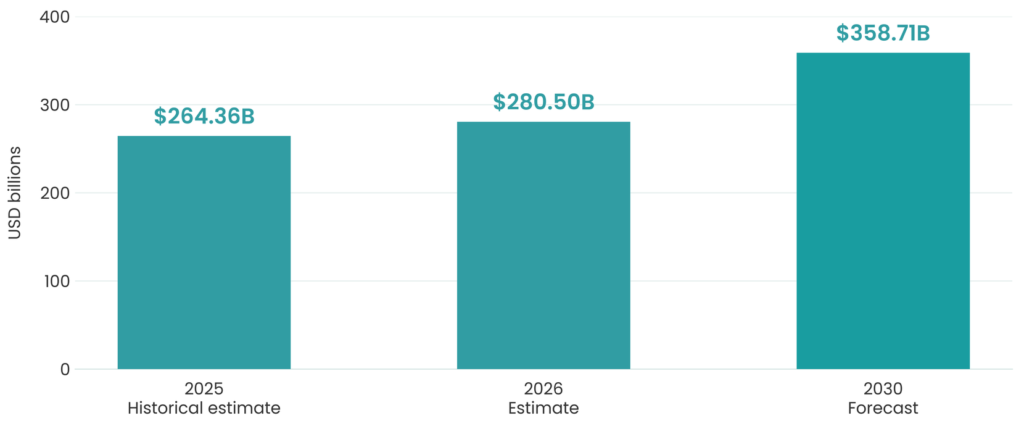
Source: The Business Research Company, September 2026. USD billions; 2025 is a historical estimate, 2026 an estimate and 2030 a forecast. The market includes installation, repairs, inspection, upgrades and some goods supplied as part of services—not standalone equipment retail sales.

Construction, building retrofits, renewable-energy integration and EV charging infrastructure are important growth drivers. Separately, the International Energy Agency’s Electricity 2026 report forecasts 3.6% average annual growth in global electricity demand during 2026–2030. That signals infrastructure needs, but it is not a forecast of electrical contractor revenue.

Asia-Pacific was the largest electrical services market in 2025, according to the industry report. Your opportunity still depends on nearby buildings, customer budgets, competition and qualified labour.

Global growth is encouraging. Local demand and job margins decide whether your company succeeds.

3. Licensing, Training, Equipment and Startup Costs

Electrical contracting carries serious safety responsibilities. Being a skilled electrician does not necessarily authorize you to operate a contracting company or supervise every category of electrical work.

Licensing varies by jurisdiction. For example, California has a C-10 electrical contractor classification, while England’s Part P building regulations address electrical safety in dwellings. These are specific examples, not worldwide licensing rules.

Confirm business registration, contractor authorization, qualified supervision, inspections, permits and insurance with the authorities where you will work.

Equipment and safety essentials

Budget for suitable testing instruments, insulated tools, power tools, protective equipment, safe access equipment, transport and quoting software. Use qualified personnel and documented procedures for safe isolation, testing and incident response. The U.S. OSHA electrical contractor standards illustrate the importance of workplace electrical safety; local requirements may differ.

Illustrative electrical business startup budget

Startup expense Example (USD)
Licensing, registration and compliance $900
Tools and testing instruments $2,400
Protective equipment $500
Initial insurance and bonding $1,500
Website, software and launch marketing $700
Working capital $4,000
Total $10,000

Planning example only—not an industry average or supplier quote. It excludes vehicle purchase, employees, major project materials and location-specific regulatory costs.

Working capital matters because materials and wages may fall due before a customer settles an invoice. Purchase specialist equipment as profitable demand develops, rather than assuming more expensive tools will create more business.

4. Create an Electrical Business Plan and Set Profitable Prices

If you’re researching how to start an electrical business, learn to calculate job margins before pursuing bigger contracts.

Your plan should cover target services, customers, licensing, equipment, monthly costs, quotation rules, payment terms and realistic workload. A professional business plan can connect those decisions with financial forecasts and cash-flow requirements.

What does a $2,000 electrical job actually earn?

Consider this hypothetical small installation:

Job calculation Amount (USD)
Customer payment $2,000
Materials and supplies −$650
Electrician labour (16 hours × $35) −$560
Employer payroll costs −$112
Transport and fuel −$75
Insurance, tools and overhead −$180
Contingency allowance −$100
Remaining before taxes and other costs $323

Illustrative assumptions, not industry pricing or wage benchmarks. The remaining amount is about 16.2% of revenue, before additional unbudgeted expenses.

A few extra hours or a materials shortage could erase much of that margin. Include testing, permit and inspection costs where applicable. For uncertain projects, explain whether you use a fixed quote or time-and-materials arrangement and obtain approval for scope changes.

Manage cash flow as carefully as profit

A job can be profitable on paper yet leave you short of cash while invoices remain unpaid. Where lawful, use clear deposit or milestone terms, track receivables and avoid committing to major material purchases without a financing plan.

Recurring commercial maintenance may smooth revenue, but only if the agreement covers the visits, response times and reporting you promise.

Price the entire job—not just the hours spent holding tools.

5. Build Safe and Efficient Electrical Business Operations

Even good quotations fall apart without disciplined project delivery. Materials arrive late, customers request changes and site conditions can affect labour hours.

Use a consistent workflow:

Enquiry → Site Assessment → Written Quote → Scheduling → Work → Testing and Inspection → Invoice → Follow-up

Confirm the scope, qualified personnel, material availability and required approvals before work begins. Record changes, obtain authorization for additional charges and keep customers informed when schedules shift.

Electrical safety must remain non-negotiable: apply the standards relevant to your work, maintain suitable tools and protective equipment, and never assign regulated tasks to unqualified personnel.

Track quoted versus actual labour, material spending, return visits, overdue invoices and project margins. As demand grows, recruit and supervise qualified electricians only when workload and cash flow justify the added cost.

More projects help only when quality, safety and profitability remain under control.

6. Find Customers and Grow Your Electrical Business

Good workmanship builds referrals, but prospective customers first need to find your company and trust its credentials.

A professional electrical business website should display your services, areas covered, genuine reviews, relevant licences and a straightforward way to request a quote. Avoid claiming qualifications or emergency response times you cannot substantiate.

Local SEO and an accurate Google Business Profile, where eligible, can help homeowners and companies discover you through location-based searches. Keep business information current and invite genuine reviews after completed work.

Build relationships with builders, property managers, commercial facilities, real estate professionals and specialist installers. These partners may refer projects or need ongoing maintenance support.

A focused digital marketing strategy can connect local search, useful service pages, targeted advertising and lead follow-up. Measure qualified enquiries, accepted quotations, customer acquisition cost and repeat revenue—not simply website visits.

Your marketing should generate jobs you can complete profitably, not just more calls.

7. Common Electrical Business Startup Mistakes

Starting an electrical contracting company can expose costly gaps that aren’t obvious when you’re focused on winning your first customers. A well-paid installation can quickly lose money if licensing requirements, extra labour, materials or payment delays are overlooked. Safety mistakes are even more serious: inadequate checks or assigning regulated work to unqualified personnel can put people and property at risk. Recognizing these common mistakes early helps you protect customers, avoid unnecessary expenses and build a more dependable business.

Working outside your authorization. Electrical qualifications, contractor licences and specialist approvals are not interchangeable. Verify what your company and workers may legally do.

Quoting from labour and materials alone. Insurance, vehicles, testing, payroll charges and contingency costs also affect margins.

Accepting large jobs without cash reserves. Material purchases and payroll may come before the final client payment.

Skipping documentation or safety controls. Inadequate testing, change orders and project records create avoidable disputes and risks.

Growing before systems are ready. More employees and projects also mean more supervision, scheduling and financial exposure.

A strong electrical company wins work it can deliver safely, documents what it does and protects its margins.

The Takeaway: Technical Skill Is Only Half the Business

Learning how to start an electrical business means thinking beyond tools and wiring. Build around the Wiring-to-Wealth Framework: Market Positioning → Qualifications and Compliance → Job Economics → Customer Acquisition and Operations.

Choose services customers need, verify your legal responsibilities, price each project properly and establish systems for reliable delivery. The result is a better foundation for repeat work and sustainable growth.

If you’re launching or expanding an electrical contracting company, ZH Consultancy can help assess startup costs, develop projections and prepare a practical growth strategy.

Faq

Frequently Asked Questions About Starting an Electrical Business

How much does it cost to start an electrical business?

It varies with tools, licensing, insurance, transport and working capital. Our $10,000 illustrative budget excludes a vehicle, employees and major project materials; actual costs may be much higher.

Do I need a licence to start an electrical business?

Requirements differ by jurisdiction. You may need contractor authorization, qualified electricians, permits and inspections before offering particular services.

Can I own an electrical company without being an electrician?

Some jurisdictions allow ownership with an appropriately qualified responsible person, while others impose different rules. Verify the applicable contractor and supervision requirements first.

Is an electrical business profitable?

It can be when quotations cover materials, labour, overhead and unexpected expenses, and customers pay on workable terms. Strong demand does not guarantee profit.

How can I get my first electrical customers?

Build a credible website, optimize local search, collect authentic reviews and develop relationships with builders and property managers. Focus on properly qualified work you can deliver reliably.

Which electrical services should a new business offer?

Begin with services that match your qualifications, available equipment, local demand and financial capacity. Add specialist installations or larger contracts only when properly authorized and prepared.

Portrait of Zain Hameed
Read & reviewed by

Zain Hameed

CEO · ZH Consultancy

Business strategy specialist helping a global client base of 800+ businesses build credible plans, financial models and investor-ready presentations.

4.9/5 Upwork rating
800+ Businesses worldwide
4.8/5 PeoplePerHour rating

Book a Free Consultation

Have a business idea, growth challenge or investor deadline? Book a free consultation and get clear next steps from our team.

Call our team

+923104049517

Untitled design (2)

Business topics

Continue reading

Related insights