

In this article
At 7:15 on Monday morning, a homeowner calls about water coming through the kitchen ceiling. You have the tools to diagnose the leak. Before you book the job, you still need to know whether you can serve that address, get there when you say you will, and charge enough to cover the trip and the repair.
Now picture Thursday afternoon. You’ve finished two calls and spent an hour at the supply counter. One customer paid on the spot. The other is waiting for an invoice to go through a property manager. Your van payment is due on Friday.
If you’re figuring out how to start a plumbing business, build the company around those ordinary days. This guide follows Jordan, a fictional qualified owner-operator starting a U.S. residential service company with one used van. Jordan’s $65,000 launch budget and job targets are worked examples in U.S. dollars. Use the same calculations with quotes, license rules, and customer demand for your own service area.
The Global and U.S. Plumbing Market
Market reports can give you a sense of the trade’s scale. Check what each one counts before you use it in a plumbing business plan, especially when a source groups plumbing with other mechanical work.
Global Plumbing Services Market Size and Outlook
Dataintelo estimates worldwide plumbing services revenue at $420 billion in 2025. Its published chart shows roughly $355 billion in 2021, $386 billion in 2023, and $403 billion in 2024. The forecast rises to about $476 billion in 2028 and $541 billion in 2031, with a published 2034 endpoint of $613.49 billion and a 4.3% compound annual growth rate from 2025 to 2034. The earlier and intermediate values are rounded readings of the publisher’s chart. The report includes installation, repairs, drain and water heater work, restoration, and materials billed by contractors. Dataintelo global plumbing services outlook.
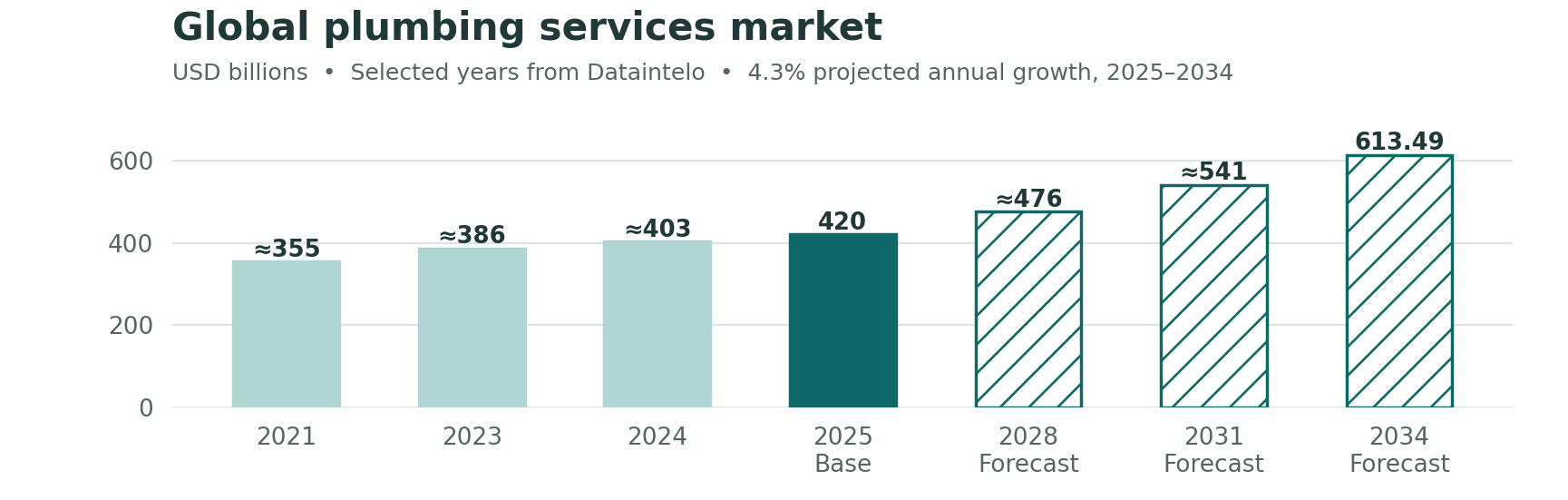
Figure 1. Global plumbing services market estimates and forecasts from Dataintelo.
U.S. Plumbing Market Size and Outlook
An earlier IBISWorld estimate, reported by ConsumerAffairs, put 2023 U.S. plumbing industry revenue at $126.4 billion. A separate April 2026 review from Rospex put broad U.S. plumbing services at $166.5 billion in 2024 and $169.8 billion in 2025. That’s about 2% growth across the two Rospex estimates. The Rospex market includes large commercial and mechanical contractors. Treat the 2023 estimate as a separate checkpoint because the estimates come from different releases. ConsumerAffairs industry figures and Rospex U.S. market review.
For a forward view, Cognitive Market Research publishes a U.S. plumbing services series with a different sizing method. It estimates $23.75 billion in 2025 and projects $32.38 billion in 2033, at roughly 3.95% compounded annually. Applying that rate to its 2025 base gives about $27.7 billion in 2029 and $30.0 billion in 2031. Those two intermediate figures are calculations for that series. The rate and forecast apply to Cognitive’s estimate. Cognitive Market Research’s U.S. forecast.
How Many U.S. Plumbing Companies Already Operate
HARDI’s 2026 industry report estimated about 161,000 U.S. businesses primarily operating in plumbing, including residential and commercial firms. Rospex’s review estimates about 132,000 businesses on its own basis. The Census Bureau’s 2023 County Business Patterns counts 111,207 employer establishments under NAICS 238220, which covers plumbing, heating, and air-conditioning contractors. That Census figure counts locations with paid employment in a broader category. For someone learning how to start a plumbing business, the next number to work out is how many companies already answer calls for the same services in your ZIP codes. HARDI findings reported by Homepros.
Choose Your Services and Research Your Territory
The first calls you accept will shape what you carry in the van, how you schedule a day, and when you get paid. Start with work you can deliver consistently in a territory you can cover.
Pick Jobs That Fit One Van
Jordan starts with residential leak diagnosis, fixture replacements, selected drain cleaning, and water heater work within the company’s license and insurance scope. A small repair can often be invoiced when the work is done. A commercial contract may involve bid documents, approved vendor status, and weeks between completing the job and getting paid. Sewer and excavation jobs can require different equipment, crew capacity, and safety procedures. Price those changes before you add a new service.
For each service, write down the customer, work you’ll accept, common parts, hours on site, average drive time, and expected job contribution. Include a dispatch rule for work outside your authorized scope or current capacity. If you’re working out how to start a plumbing business with one vehicle, that list tells you which jobs you can advertise confidently on day one.
Check Whether Enough Nearby Customers Will Call
Pick a compact set of ZIP codes. Look up competitors on Google Maps and record the services they actually promote, their hours, and what customers praise or complain about. If reviews repeatedly mention missed appointments, test a specific promise you can keep, such as a confirmed arrival window and a text when the technician is on the way. Use Census household data, local search terms, and conversations with suppliers or property managers to check whether the demand fits your plan.
Suppose 25,000 households live in Jordan’s territory. At an illustrative one relevant service occasion per five households a year, there would be 5,000 occasions. Forty paid jobs a month would represent 480 a year, just under 10% of that assumed pool. Ask where that share would come from and how many calls you’d have to answer to win it. Replace the assumed service rate with evidence as you collect it. See ZH Consultancy’s market research services.
Get Licensed and Set Up the Business
Before you decide how to start a plumbing business in a particular state, make a list of your intended services and the cities you’ll serve. That gives licensing and building officials enough detail to tell you what your company can offer and who can supervise or pull permits.
Verify Plumbing License Requirements by Location
Ask your state licensing authority which credentials the company and its qualifying plumber need. Then ask local building departments about contractor registration, permits, inspections, and license disclosures for your service list. For example, Texas sets qualifications and a minimum $300,000 commercial liability coverage requirement for its Responsible Master Plumber designation. California lists plumbing contracting under its C-36 classification, and New York City has a Licensed Master Plumber process for permitted plumbing work. Check the current plumbing license requirements for your own addresses and scope. Texas State Board of Plumbing Examiners.
Keep a simple record of who holds each credential, what it covers, when it expires, and which municipality needs what paperwork. If you’ll rely on a qualifying employee, confirm how their supervision must work and what happens if they leave. Review any separate requirements before advertising gas work, backflow testing, or excavation. If employees will do regulated or hazardous work, confirm the training, supervision, and applicable safety rules before taking the job. For a permitted call, ask who must file, when the inspection happens, and which work must stay accessible until it passes. Put the fee and timing into the estimate.
Set Up Registration Insurance and Job Paperwork
Choose an entity and check name availability in your state. File entity or trade-name paperwork as required, apply directly to the IRS for an EIN when needed, and open a separate business bank account. Ask a tax professional how your state treats materials, labor, sales tax, payroll, and owner compensation. The business registration and the trade authorization are separate steps.
Get written quotes for general liability, commercial auto, tools coverage, and any required bonds or workers’ compensation. Check what the policy covers before you accept water heater, sewer, or commercial work. Set up written estimates, approval for changes in scope, permit responsibilities, invoices, and a callback procedure. Add license renewals and insurance payments to the calendar you use for cash planning.
Calculate Startup Funding and Working Capital
A used van listed at $26,000 can make the launch feel affordable. The plumbing business startup costs that come after the purchase decide how long you can trade while the phone is still quiet.
Price the Equipment and the Opening Reserve
Jordan’s example assumes one qualified owner, one used van, and a compact residential service area. The budget separates money spent or committed before launch from the reserve available once jobs begin. Get quotes for the equipment, insurance, and website before using this funding target for your business.
Startup item | Illustrative cost |
|---|---|
Used van and basic modifications | $26,000 |
Tools, drain equipment, and diagnostics | $7,000 |
Opening stock of parts and consumables | $2,500 |
Licenses, bonds, insurance deposits, and setup | $3,200 |
Local market research and business planning | $800 |
Logo and basic van identification | $1,000 |
Website and booking setup | $1,800 |
Company profile and customer documents | $700 |
Pre-launch marketing | $2,500 |
Total pre-opening requirement | $45,500 |
Opening working-capital reserve | $19,500 |
Total startup funding | $65,000 |
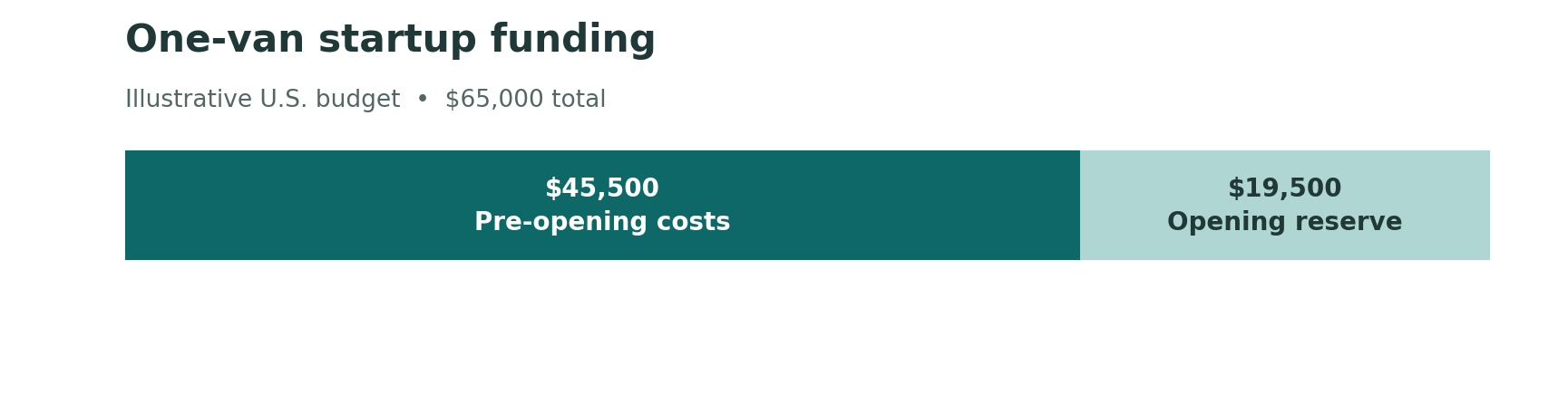
Figure 2. The $65,000 one-van model includes $45,500 before opening and $19,500 in operating reserve.
When deciding how to start a plumbing business on a smaller budget, list the tools and vehicle you already have and what they’re insured and equipped to do. Ask a mechanic to inspect a used van and price the first service. Compare the plumbing business startup costs for each setup with the same reserve assumptions. The figure you can spend on the van depends on what you still need to carry into month one. The $2,500 launch allowance covers one-time setup and promotion. The monthly media budget begins when you’re authorized and ready to take calls.
Test the Loan Payment Before You Borrow
If Jordan contributes $25,000, the funding gap is $40,000. A hypothetical five-year loan at 11% annual interest would cost about $870 a month before fees. Compare actual term sheets for equipment financing, bank lending, or an eligible SBA-backed loan. Look at the cash due at closing, the first payment date, collateral, and fees. Keep the owner’s household needs visible in the forecast so the business reserve has a clear purpose.
Build a Plumbing Business Plan Around Paid Jobs
The number of jobs you need comes from what each one contributes. Before you spend money on advertising, work out what’s left when the invoice has been collected and the job’s direct costs have been paid.
Find the Contribution on a Typical Call
Jordan’s model uses a $425 average collected invoice and $135 in direct job costs, leaving $290 per job. Direct costs include parts, consumables, and other job-specific expenses. The budget handles routine vehicle costs and advertising separately. Price real calls from your supplier invoices and total time, including the drive, estimate, purchase of materials, and any callback. A $425 invoice can leave very different amounts depending on what happened on the job.
A plumbing business plan should show which mix of repairs and installations could deliver the average invoice and contribution. Track payment timing as well. A property manager paying on terms may be a valuable customer, but you may still have to buy materials and make the van payment before that check arrives. Use completed, collected jobs in the simple model and model delayed collections in a separate cash forecast.
Add Monthly Running and Marketing Costs
Start with the bills you pay even in a quiet week. Budget the owner’s withdrawal separately so you can see what it costs to run the business.
Recurring cash item | Per month |
|---|---|
Insurance, phone, software, website, and administration | $1,050 |
Google Search media budget | $1,800 |
Local profile support allowance | $200 |
Fuel and routine vehicle allowance | $550 |
Total business cash costs | $3,600 |
Planned owner draw | $2,900 |
Cash requirement before loan payments | $6,500 |
Over twelve months, that’s $43,200 in recurring business cash costs, including $24,000 for paid search and local profile support. The $34,800 annual owner draw is a separate cash need. How owner compensation is recorded depends on the entity and tax treatment. Keep a separate line for any new staffing, office rent, or vehicle replacement you plan to fund.
Calculate Monthly Break-Even and First-Year Cash
The operating budget takes 13 collected jobs a month at $290 contribution. Including the owner draw raises the target to 23. Include the illustrative $870 loan payment and it becomes 26. Divide the monthly cash requirement by the contribution per collected job and round up. If contribution falls to $230, the loan-inclusive target rises to 33 jobs. Use that sensitivity when you work out how to start a plumbing business with fewer high-ticket jobs than you expected.
Period | Paid jobs | Collected sales | Cash after costs and draws |
|---|---|---|---|
Q1 | 60 | $25,500 | −$2,100 |
Q2 | 90 | $38,250 | $6,600 |
Q3 | 120 | $51,000 | $15,300 |
Q4 | 150 | $63,750 | $24,000 |
Year 1 | 420 | $178,500 | $43,800 |
The example uses the same $425 invoice and $135 direct cost throughout, with $6,500 monthly for the business and draws. Year-one cash after the planned draws is $43,800 before debt payments, taxes, equipment replacement, and changes in collections. Twelve illustrative loan payments reduce it to $33,360 before the other cash movements. Build a downside case into your plumbing business plan and lay out payroll, supplier payments, and collections by week. For help turning quotes and demand assumptions into a funding request, see ZH Consultancy’s business plan writing services and financial modeling services.
Build a Plumbing Brand and Website
A customer starts deciding whether to trust you before you touch a pipe. As you work out how to start a plumbing business, think about what that person can verify from the first call through the final invoice.
Make the Name and Logo Work on a Driveway
Say Jordan has booked a repair for Tuesday morning. When the van pulls up, the customer should recognize the name from the text confirmation. Use a name you can register and check for relevant trademarks before buying decals. Pick a logo that reads from across the driveway and stays legible on a phone or a printed estimate. Check the plumbing license requirements for any license numbers or business details that must appear on vehicles, paperwork, or advertising.
Start with readable vehicle identification, clean uniforms, and consistent estimates and invoices. The model assigns $1,000 to the logo and basic decals. Keep the branding portion of your plumbing business startup costs tied to where customers will see it. See ZH Consultancy’s logo design services.
Give Property Managers a Company Profile They Can Use
A property manager dealing with a leak in a vacant unit wants to know whether you cover the property, who can approve extra work, and where the invoice will go. Put those answers in a short company profile with your service list, coverage area, verified credentials, insurance details, scheduling process, and contact. Use genuine team experience and references you have permission to share. Bring the same approval and invoicing process to the first call so the profile reflects how you work. See ZH Consultancy’s company profile design services.
Make the Website Useful During a Leak
Open the site on a phone and look for three things the caller needs. Can you fix this problem? Do you cover this address? Can they reach you now? Put the phone number and operating hours near the top, and give leak repair, drain cleaning, and water heater work their own useful pages if you offer them. Let customers enter a ZIP code, describe the problem, and choose a callback window. Publish service-area information specific to the places you genuinely serve.
Test a call and a request form from a real phone. Check where each goes and who follows up. Track the inquiry, appointment, completed work, and collected invoice as separate steps. That lets the website help you learn how to start a plumbing business that gets work you can actually book. See ZH Consultancy’s website development services.
Get Found on Google Maps and Earn Reviews
A homeowner with a wet ceiling may be looking at a map listing while dialing another company. Make your actual coverage, hours, and contact options clear before that customer has to ask.
Set Up a Google Business Profile for Plumbers
Claim or create a profile if the company is eligible and follow Google’s verification process. Use the real name on your van and estimates. Select the most accurate primary category, such as Plumber for a plumbing company, and add real services, hours, and a working phone number. If you’re learning how to start a plumbing business from a home office and customers never visit that address, use the service-area setup and hide the address from public view. List the cities or ZIP codes you can reasonably serve. Google’s Business Profile guidelines.
A Google Business Profile for plumbers should tell the same story as the website. Add genuine photos of the van, team, and work with permission. Test the website and booking links. Update holiday hours and explain what happens outside normal hours. If you answer emergency calls only during certain windows, make that clear. Google’s local results consider relevance, distance, and how well known a business is. Keep service areas accurate so the customer can tell if a visit is realistic.
Ask for Reviews After the Job Is Done
When the invoice goes out, invite the customer to leave honest feedback using the profile’s review link. Ask customers consistently and keep discounts or gifts separate from the request. If a review mentions a missed arrival window, check the booking and dispatch record before replying. A short public response can acknowledge the issue and offer a private way to follow up. Keep the customer’s address and job details private.
Review calls, website actions, and booked jobs by week. A Google Business Profile for plumbers can put the business in front of local callers. Your job log tells you how many were in range, what they needed, and whether they booked. See ZH Consultancy’s Google Business Profile optimization services.
Use Google Ads and Meta Ads Where They Pay Off
When planning how to start a plumbing business, separate the customer with an active leak from the customer thinking about a bathroom upgrade next spring. Those customers need different offers and are likely to find you in different places.
Compare Plumbing Marketing Strategies by Customer Intent
Search ads can reach someone looking for a drain repair or water heater replacement now. Local Services Ads may be available to eligible plumbing businesses that complete Google’s required checks. Google generally charges for valid leads on that platform. Meta can put before-and-after work, a maintenance offer, or a planned upgrade in front of a local homeowner who is browsing.
Channel | Good starting use | What to measure |
|---|---|---|
Google Search Ads | Urgent repair and replacement searches | Cost per completed, paid job |
Google Local Services Ads | Local service inquiries after eligibility checks | Valid lead charges and paid jobs |
Meta Ads | Planned upgrades and local awareness | Qualified requests, booked work, and contribution |
Start with Search for an urgent, clearly defined service you can schedule. Limit the campaign to an area you can cover, group ads by service, and send each ad to the matching page. Use responsive Search ads with call assets if phone calls are important. Review the actual search terms and exclude irrelevant ones such as apprenticeships or wholesale parts. Run ads during the hours someone can respond and track what happens after the call.
Put a Price on Each Paid Job
Suppose Search produces inquiries at $130 each. If 40% become completed, paid jobs, acquisition costs $325 per job. Jordan’s $425 repair leaves $290 before marketing and overhead, so that campaign would lose $35 per first job even before overhead. At the same 40% conversion rate, a lead must cost $116 or less just to cover acquisition from the first job’s contribution. Set a lower target if the job also needs to help cover insurance, vehicle costs, and the owner’s cash needs.
That calculation helps you compare plumbing marketing strategies. You can work on missed calls and targeting, or test a service with a contribution that supports the acquisition cost. Keep the $1,800 monthly media budget in the business cash model once. Use the per-job calculation to judge the channel on its own. See ZH Consultancy’s Google Ads management services.
Decide When to Test Local Services Ads or Meta
If Local Services Ads are available for your trade and ZIP codes, check Google’s screening and verification steps and the current Google Verified badge requirements. Track booked jobs from those leads against Search. Jordan could test $1,200 Search and $600 Local Services Ads within the $1,800 allowance once eligible. Keep the Google Business Profile for plumbers accurate so people who look up the company after seeing an ad find the same hours and service area.
If you want to promote a planned upgrade, try a short local Meta campaign with a real project photo you have permission to use. Explain the service and what happens when someone requests an estimate. Set a small test budget from the existing media allowance and define what counts as a qualified request. Compare plumbing marketing strategies over a window that gives each offer time to convert. A caller might book a drain repair in minutes and take weeks to approve a bathroom project. See ZH Consultancy’s Meta Ads management services.
Run the First 90 Days and Fix Costly Mistakes
One of the hardest parts of learning how to start a plumbing business is deciding what to fix when the first month feels slow. Start with the call log and the cash forecast. They can tell you whether the problem is too few inquiries, too many missed calls, or jobs that cost more to deliver than expected.
Give Each Month a Job
Confirm licensing, insurance, and the phone handoff before taking the first paid call. Use each month to test a different part of the operation.
Timing | What to do | What to review |
|---|---|---|
Days 1 to 30 | Test phones, forms, routing, invoicing, and one Search campaign | Qualified inquiries and missed calls |
Days 31 to 60 | Adjust targeting, review job costs, and request honest reviews | Bookings, collected invoices, and callbacks |
Days 61 to 90 | Compare channels and test a small expansion within capacity | Cost per paid job and cash left in reserve |
The model targets 60 paid jobs in the first quarter. At $425 each, that’s $25,500 collected. Direct costs total $8,100, and three months of operating costs and draws total $19,500. That uses $2,100 of cash before financing. Add $2,610 for three loan payments and Jordan draws $4,710 from the $19,500 opening reserve, leaving $14,790 before taxes and other cash movements. If volume sticks at 15 jobs a month, the same model uses $3,020 per month after debt service. The opening reserve would cover about six full months at that rate. A major van repair or delayed collection can shorten the runway. Put both cases into a rolling 13-week forecast.
After each job, log the service, ZIP code, lead source, time spent, direct cost, invoice, and payment date. If Search is delivering the right inquiries but the phone goes to voicemail while you’re on a call, fix the handoff or schedule the campaign around staffed hours. That will tell you more about your plumbing marketing strategies than adding another week of spend.
Fix the Mistakes That Drain Cash
- Buying the van before pricing the rest of the business. Get the full plumbing business startup costs onto one page. Check what the van purchase leaves for insurance, parts, and several weeks of uneven collections.
- Quoting from memory. Build an estimate from parts, time, permits where applicable, and the scope you expect. Get approval when the work changes and record the actual time so you can price the next call.
- Driving too far for small repairs. Check contribution per hour, including travel and supplier stops. Group scheduled work geographically and make sure the service area you show online fits the territory you can cover.
- Accepting work outside your authority or capacity. Check the plumbing license requirements before adding services or ZIP codes. Keep the company’s permits, supervision, insurance, and equipment aligned with the jobs you advertise.
Add a Technician When the Work Can Support It
The model reaches 50 paid jobs per month in its fourth quarter, or about two to three jobs per billable day if Jordan has 20 field days. Check that the schedule leaves room for travel, parts runs, paperwork, and callbacks. If good jobs are consistently going unserved, price what a hire and a vehicle would cost. A hypothetical $9,000 in added monthly cash costs needs 32 extra paid jobs at $290 contribution. Twenty additional jobs would leave a $3,200 monthly gap. Build that test into your plumbing business plan before signing for a second van.
The Takeaway
If you’re working out how to start a plumbing business, come back to that Monday call. Can you legally do the work, arrive when promised, and collect enough to cover the trip? Jordan’s example needs $65,000 to launch and 26 collected jobs a month to cover business costs, the planned draw, and the illustrative loan. Run your own numbers against actual quotes and demand. Then use a Google Business Profile for plumbers and one measurable campaign to find out which jobs you can win and deliver consistently.
Your startup budget, local licensing rules, and job mix determine how much you need to open and what it takes to keep the van on the road.
Faq
Frequently Asked Questions
The one-van example requires $45,500 before opening and a $19,500 reserve, for a total of $65,000. If you’re figuring out how to start a plumbing business with equipment you already own, rebuild your plumbing business startup costs from local quotes. Include any inspection, repairs, coverage changes, and cash needed for a slow launch.
Check the plumbing license requirements where the company will operate. Ownership and authorization to offer, supervise, or perform regulated work are separate. Depending on the location, the company may need a licensed qualifying person, a contractor license, and local registration. Confirm those rules before you quote or advertise the work.
Divide monthly cash needs by the contribution from one collected job and round up. At $290 contribution, this example needs 13 jobs for the $3,600 business budget, 23 with the owner draw, and 26 with the illustrative loan payment. Add your own tax and replacement reserves to see how those needs change the target.
Use collected sales, job costs, overhead, and financing to model what the business can pay the owner. Jordan’s first-year model leaves $43,800 after the planned $34,800 in draws and before loan payments and other exclusions. That cash may need to stay in the business for taxes, equipment, or slow collections. Build your plumbing business plan around those commitments when deciding how much to draw.
If you’re planning how to start a plumbing business with limited ad spend, set up an eligible Google Business Profile for plumbers, publish clear service pages, and tell local property managers and referral partners what you can handle. Answer calls promptly and ask real customers for honest reviews. Track which requests turn into paid work before adding spend.
For urgent repairs, start by testing Google Search or eligible Local Services Ads against actual paid jobs. Meta can be useful for awareness and planned upgrades with a longer buying cycle. Compare plumbing marketing strategies using the same measures across channels, including what you pay per paid job and the contribution that job leaves.
A suitable used vehicle or one you already own may work if it can safely carry the tools and stock you need and is properly insured for business use. Use your service list to price a dependable setup. Check the monthly costs and reserve alongside the upfront price.

Zain Hameed
Business strategy specialist helping a global client base of 800+ businesses build credible plans, financial models and investor-ready presentations.
In this article
Book a Free Consultation
Have a business idea, growth challenge or investor deadline? Book a free consultation and get clear next steps from our team.
Call our team
+923104049517
Email us

Business Topics
Business topics
Continue reading
Related insights

How to Start a Laundromat Business: A Complete U.S. Founder’s Guide
Learn how to start a laundromat business in the USA: market

How to Start a Construction Business in the USA
A homeowner wants to sign a $75,000 remodeling contract on Friday.

How to Start a Plumbing Business in the USA
At 7:15 on Monday morning, a homeowner calls about water coming

How to Start a Car Rental Business in the USA: A Founder’s Practical Guide
A family lands after midnight. They do not care whether your

How to Start a Landscaping Business: Costs, Licenses, Marketing and Profit
Picture two lawns on the same street. One homeowner wants a

How to Start a Cafe Business in the USA: Costs, Licenses, Marketing and Profit
You’re standing inside an empty storefront, and you can already picture