
BUSINESS STRATEGY / FOUNDER GUIDE

How to Start a Lash Business: From Lash Artist to Business Owner

Learn how to start a lash business, understand training and licensing, budget startup costs, price services, attract clients and plan for profit.

ZH Research Team

Reviewed by Zain Hameed

ZH Editorial Team

Business Strategy Desk

Being good at eyelash extensions and running a profitable lash business are two different skills.

You might know how to create a beautiful classic set, choose the right curl and make clients feel confident. But once you start charging for appointments, other questions matter. What training do you need? How much should you charge? Can you afford a studio? And how many clients must return each month for the business to work?

That is the part many new lash entrepreneurs underestimate.

Starting a lash business isn’t just buying supplies and creating an Instagram page. You’re building a service that depends on client safety, clear pricing, consistent appointments and trust.

Think of it as the Lash Artist-to-Business-Owner Shift:

Positioning: Which services or products will you offer, and to whom?

Skills and compliance: Can you deliver them safely and legally?

Business economics: Will each booking cover your time, supplies and overhead?

Client acquisition and retention: How will people find you—and why will they return?

Here’s how to build those four areas into a business.

1. Choose Your Lash Business Model

Before investing in supplies or renting a studio, decide what you actually want to sell.

A home-based lash artist has different costs and responsibilities from a salon owner or an online false-eyelash retailer. Trying to build all three models at once can stretch your budget and attention.

Start with a focused offer

You might operate from an approved home studio, rent a treatment room in a salon, open an independent studio or offer mobile services where permitted. Another route is selling lash strips, kits or related products online.

Service businesses earn money through appointments and repeat clients. Product businesses depend more on suppliers, inventory, fulfilment and online sales. Choose the model that matches your skills, budget and customer demand.

Identify your ideal customer

“Anyone who wants lashes” is too broad.

A professional looking for subtle, natural extensions may value convenience and consistent results. Someone booking for special occasions may prioritize dramatic styles and availability.

Study local competitors’ prices, portfolios, reviews and booking experiences. Are clients complaining about inconsistent results, poor communication or limited appointment times?

The question isn’t what other lash artists are doing. It’s what you can offer that your target clients will value enough to pay for.

If you’re unsure whether the opportunity makes commercial sense, business consultancy support can help you test demand before taking on significant costs.

2. Global Lash Market Outlook and Opportunities

The global market offers encouraging signs of demand, but the market data needs to be interpreted carefully.

Grand View Research values the global false eyelashes product market at approximately USD 2.0 billion in 2025, estimates USD 2.1 billion in 2026, and forecasts USD 3.4 billion by 2033. Its projected annual growth rate for 2026–2033 is 6.9%.

Global false eyelashes market forecast, 2025–2033
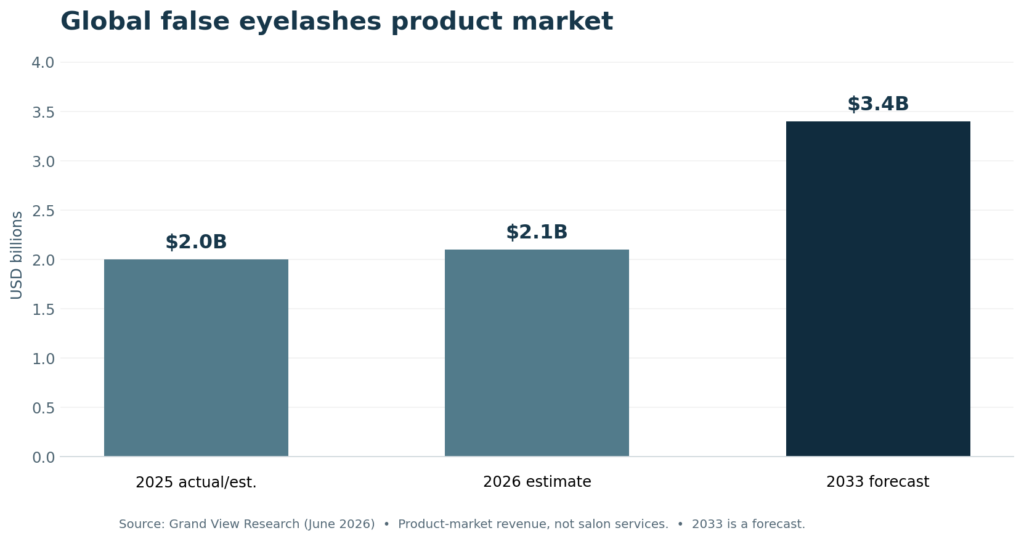
Source: Grand View Research, False Eyelashes Market (updated June 2026). Values in USD billions; 2026 is an estimate and 2033 is a forecast. This is a product-market estimate, not global lash salon or artist service revenue.

What is creating opportunities?

Social media beauty trends, interest in personalized styles, reusable products and online beauty retail are influencing the market. Professionally applied extensions may appeal to customers seeking longer-lasting results, while online sellers can reach buyers beyond their local area.

For an appointment-based business, however, national or global product sales cannot tell you how many clients will book in your neighborhood.

Your opportunity depends on local demand, competitive positioning and whether enough customers return at prices that cover your costs.

3. Understand Training, Licensing and Lash Business Startup Costs

A lash business may be smaller than a full-service salon, but it still requires professional skills, safe products and an appropriate workspace.

Check training and licensing before taking clients

Training should cover application and removal techniques, sanitation, product handling, consultations, and what to do if a client reports irritation or discomfort.

Licensing varies by country and region. Some jurisdictions require a cosmetology or esthetician licence, while others have different requirements for the premises or practitioner.

For example, the California Board of Barbering and Cosmetology states that lash extension services performed for pay require an appropriate cosmetology or esthetician licence; a standalone course certificate is not a substitute.

You may also need business registration, premises approval, insurance and compliant sanitation procedures. Check the requirements where you intend to work—not just what an online training provider promises.

Treat client safety as part of your reputation

The U.S. Food and Drug Administration warns that false eyelashes, extensions and adhesives can cause irritation or allergic reactions in the eye area. Use suitable products, follow manufacturer instructions, maintain hygiene standards and never ignore a customer’s safety concerns.

Budget for the essentials

Depending on your model, startup costs may include:

  • Training and professional licensing
  • Lashes, adhesives, tools and disposables
  • Treatment bed, lighting and sanitation supplies
  • Insurance, registration and workspace costs
  • Booking software, payment fees and marketing
  • Stock, packaging and shipping if selling products

Separate essential now, needed as bookings grow and optional upgrades. A beautiful studio is useful, but expensive décor cannot replace qualified service or paying clients.

4. Create a Lash Business Plan and Set Profitable Prices

A full appointment calendar doesn’t guarantee a healthy income.

You may be busy applying sets all week but still have little left after product costs, rent, booking fees and unpaid preparation time.

Create a simple business plan

Your lash business plan should explain your services, target customers, prices, startup spending, recurring costs, marketing and realistic appointment capacity.

Then work backwards from your income goal rather than guessing what to charge.

Know the economics of each booking

Suppose you charge $100 for a full set. A simplified example in USD might look like this:

Item Amount
Customer payment $100
Supplies and disposables −$12
Payment processing −$3
Remaining before overhead and your labour $85

That $85 is not net profit. It must still cover your time, insurance, rent or workspace costs, software, marketing and taxes.

If the appointment takes two hours plus cleaning and preparation, your effective hourly earnings may be lower than the menu price suggests.

Price full sets and infills separately

Depending on your technique and client needs, you may offer classic, hybrid or volume sets alongside refill appointments. Set prices based on treatment time, consumables, skill, overhead and market expectations—not simply the lowest competitor quote.

If your monthly revenue target is $4,000 and your average booking is $100, you need around 40 appointments to reach that revenue, before expenses. Ask whether your available hours and expected demand support that workload.

The objective isn’t just to fill the calendar. It’s to earn sustainably from the hours you work.

5. Build a Professional Lash Operation

What clients experience before and after a treatment can be as important to retention as the finished look.

Create a consistent process:

Enquiry → Consultation → Booking → Treatment → Aftercare → Follow-up → Rebooking

Discuss expectations and relevant sensitivities before application. Maintain appropriate records, consent procedures and hygiene standards, and keep personal client information secure.

Protect your appointment time

A missed appointment creates an empty slot you may not be able to resell. Use booking reminders, clear cancellation rules and reasonable deposit policies where allowed.

Track the numbers that matter: appointment value, rebooking rate, cancellations, product costs and customer feedback.

Expand only when the numbers support it

Longer hours, a second treatment bed or another qualified artist can increase capacity. They also increase complexity and cost.

Don’t add rent or payroll simply because your social media looks busy. Expand when you have consistent demand, good retention and enough margin to support it.

6. Attract and Retain Lash Clients

Excellent technique does not help your business if potential customers never discover you.

Make booking easy

A professional business website should show your services, price range, portfolio, location, availability and how to book. Use genuine images with permission and make the next step obvious.

For local services, a Google Business Profile, where available and eligible, can help customers find your studio through Search and Maps. Keep your hours and contact details accurate and invite genuine reviews from satisfied clients.

Use social media to build confidence

Instagram and TikTok are useful for showing styles, results and behind-the-scenes professionalism. But followers are not the same thing as booked appointments.

Explain what happens during a visit, answer common questions and show work relevant to the customers you want to attract.

Turn new clients into returning clients

Consistent technique, suitable aftercare guidance, helpful reminders and convenient rebooking can create stronger customer relationships. Referrals from clients and nearby beauty businesses can support growth.

As bookings increase, a focused digital marketing strategy can connect local SEO, reviews, social media and targeted promotions.

Track enquiries, confirmed appointments, rebookings and customer acquisition cost, not just likes and reach.

7. Common Lash Business Startup Mistakes

Charging too little

Introductory offers can attract first-time clients, but ongoing prices must cover your time, materials and overhead.

Investing heavily in a studio before demand exists

Begin with a safe, professional setup that local regulations allow. Upgrade when repeat bookings can support additional costs.

Treating certificates as automatic legal permission

Training and licensing are not always the same. Confirm your jurisdiction’s professional and premises requirements before taking paid appointments.

Overlooking safety and consultations

Shortcuts around hygiene, adhesives or client concerns can undermine trust and create serious risks.

Chasing followers instead of retaining customers

A smaller base of satisfied returning clients may support steadier revenue than constant one-time promotional bookings.

The Takeaway: Beautiful Lashes Aren't the Whole Business

Learning how to start a lash business means learning more than lash application.

You need an offer customers want, the qualifications and standards to deliver it safely, prices that support your time and a reliable way to build repeat bookings.

That is the Lash Artist-to-Business-Owner Shift:

Positioning → Skills and Compliance → Business Economics → Client Acquisition and Retention

If you’re launching or expanding a lash business, ZH Consultancy can help you evaluate startup costs, prepare a business plan and build financial projections that show whether your business model can work.

Faq

Frequently Asked Questions About Starting a Lash Business

How much does it cost to start a lash business?

Costs vary with training, licensing, equipment, insurance and premises. An approved home setup may cost less than a dedicated studio, but both require enough working capital to operate while bookings build.

Do I need a licence to start a lash business?

Possibly. Requirements vary by location and service type. Some jurisdictions require cosmetology or esthetician licensure, so verify the rules before offering treatments.

Can I start a lash business from home?

Yes, where professional, hygiene, zoning and home-business rules allow. Confirm licensing, insurance and suitability of the space first.

Is a lash business profitable?

It can be if prices cover products, treatment time, overhead and marketing. Rebooking rates and efficient use of appointment hours are important.

How do lash artists get their first clients?

Use relevant portfolio work, genuine reviews, local search, referrals, social media and partnerships with other beauty professionals. Make booking straightforward.

Do I need a business plan for a lash business?

A formal plan isn’t always required, but it helps you calculate startup costs, set prices, estimate capacity, forecast cash flow and evaluate when to expand.

Portrait of Zain Hameed
Read & reviewed by

Zain Hameed

CEO · ZH Consultancy

Business strategy specialist helping a global client base of 800+ businesses build credible plans, financial models and investor-ready presentations.

4.6/5 Upwork rating
800+ Businesses worldwide
4.8/5 PeoplePerHour rating

In this article

1. Choose Your Lash Business Model

2. Global Lash Market Outlook and Opportunities

3. Training, Licensing and Startup Costs

4. Create a Business Plan and Set Prices

5. Build a Professional Lash Operation

6. Attract and Retain Lash Clients

7. Common Lash Business Startup Mistakes

The Takeaway

Frequently Asked Questions

Book a Free Consultation

Have a business idea, growth challenge or investor deadline? Book a free consultation and get clear next steps from our team.

Call our team

+923104049517

Email us

info@zhconsultancy.com

Untitled design (2)

Business topics

Continue reading

Related insights