
How to Open an Ice Cream shop in Dubai?

Are you an entrepreneur or business looking to open ice cream shops in Sydney Australia?
In this article, we’ll guide you through all the steps you need to take to start your own ice cream business in Sydney Australia.
Introduction
Sydney is famous for its sunny, outdoorsy lifestyle, and the weather plays a big role in how people spend their days. For much of the year, the city enjoys warm temperatures and clear skies that make people want to be outside. In summer, the days can feel hot and lively, with locals heading to beaches, coastal walks, and parks to enjoy the fresh air. Even in winter, Sydney is usually mild rather than freezing, so people still meet up outdoors, stroll along the harbour, and explore busy shopping streets without feeling pushed indoors for months at a time.
This long stretch of pleasant weather makes an ice cream shop a natural idea in Sydney. On bright afternoons, people often want a cool treat after a walk, a swim, or a day of sightseeing. Families look for something fun and easy that kids will love, while adults enjoy a sweet break that feels light and refreshing. Ice cream also suits many tastes, from simple favourites like chocolate and vanilla to fruity options like mango, strawberry, or lemon. When your shop offers good flavours and a welcoming vibe, customers do not just buy a scoop, they buy a small moment of happiness. Sitting outside with an ice cream, chatting with friends, and watching the city move around you feels relaxed, casual, and very Sydney.
Key Reasons Sydney Suits an Ice Cream Shop
⦁ Warm and sunny weather encourages outdoor walking and beach visits.
⦁ People naturally crave cold treats after being outside in the heat.
⦁ Families often buy ice cream as an easy, fun reward for kids.
⦁ Ice cream appeals to both locals and tourists looking for a quick snack.
⦁ Many flavour options let you serve different tastes, from classic to fruity.
⦁ Mild winters mean you can still attract customers beyond the summer season.
Market Statistics
Sydney can be a strong ice cream shop market because there is a big local customer base, a steady flow of visitors, and a climate that supports cold treats for a large part of the year. For starters, Greater Sydney had an Estimated Resident Population of 5,557,233 as at 30 June 2024, and it grew by 107,538 people (2.0%) in 2023 to 24, which is a meaningful jump in potential daily customers across suburbs. When a city adds that many people in a year, it usually means more households, more families, and more people buying “small treats” close to home, especially on weekends and after dinner. The population detail is also useful for understanding the type of demand: Australian Bureau of Statistics shows Sydney’s growth is strongly linked to overseas migration (120,886), alongside natural increase (27,738) and net internal migration loss (-41,086), which suggests lots of newcomers and a mix of cultures and taste preferences (a good reason to offer both classic flavours and a few unique, locally themed options).
On top of residents, tourism can boost walk-in sales because ice cream is a high-impulse product, especially in busy areas near attractions, beaches, shopping streets, and ferry or train hubs. Destination NSW reports that in the September quarter 2025, Sydney recorded 17.0 million visitors, 30.5 million nights, and $8.8 billion in expenditure, and in the year ended September 2025 the city welcomed 3.7 million international visitors who spent $12.8 billion (with 86.4 million nights), which is exactly the kind of foot traffic that supports dessert businesses that rely on fast decisions and high repeat buying.
One market report that Ice Cream Manufacturing revenue ~ $2.1B in 2025, growing at a 6.1% CAGR over the past five years and it was ~AUD 1.40B in 2025 and projects growth over the next decade.
Startup Expenses
Calculating funding requirements is a crucial step as it helps to make sure that you have enough financial resources to start your business and keep it running smoothly. In this way, you can plan effectively, minimize the risk of financial loss, and increase the chances of your ice cream shop business success.
Below are the estimated costs in US dollars for opening a small ice cream shop in Sydney, Australia:
Expense Category | Estimated Description Cost (AED) | Description |
Rent | 30,000 – 50,000 | Monthly rental cost |
Renovation/Fit-Out | 20,000 – 40,000 | Cost of renovating and fitting. |
Equipment | 15,000 – 25,000 | Purchase or lease costs for essential equipment. |
Inventory | 5,000 – 10,000 | Initial stock of ingredient. |
Licenses and Permits | 5,000 – 8,000 | Fees for business licenses. |
Marketing and Promotion | 3,000 – 5,000 | Budget for marketing |
Staff Salaries | 8,000 – 12,000/month | Estimated monthly payroll expenses. |
Utilities | 2,000 – 3,000/month | Monthly expenses for electricity and other |
Insurance | 1,500 – 3,000/year | Annual premium for insurance. |
Miscellaneous Expenses | 2,000 – 5,000 | costs of miscellaneous expenses |
These cost estimates are in US dollars and are meant for a small ice cream shop in Sydney. Your real costs can be higher or lower depending on things like your exact location, rent, fit-out needs, and supplier prices.
For a more accurate budget and funding plan, it is a good idea to speak with a professional business consultant who can review your business model and calculate costs based on your specific shop setup.
By identifying your target demographic, you can personalize your ice cream shop to cater to their needs and preferences, setting yourself apart from competitors and guaranteeing the success of your business in Dubai.
Licence and Registration
In Sydney (and NSW), the licensing and registration process is mostly a few simple steps: first, register your business by getting an ABN through the Australian Business Register (it is free). If you want to trade under a shop name (not your own personal name), register that business name with Australian Securities and Investments Commission (their website lists the fees, such as $45 for 1 year or $104 for 3 years). Next, register for GST only if you expect your turnover to reach $75,000 or more, and the government guidance says you should register within 21 days of becoming aware you will go over the threshold. Then, before you open, you must notify either your local council or the NSW Food Authority about your food business (most retail food shops notify council, and Service NSW explains how this works). Finally, many food businesses need at least one trained Food Safety Supervisor (depending on what food you prepare and how you serve it), and you should also check your local council rules for approvals for the shop use and fit-out before you start trading.
Below are some useful links for the registration procedure:
Get an ABN (free): This is your business ID number.
https://business.gov.au/registrations/register-for-an-australian-business-number-abn
Register your business name (if needed): Do this if you are trading under a shop name.
https://www.asic.gov.au/for-business-and-companies/business-names/register-a-business-name/
Register for GST (only if needed): You must register if you expect turnover to be $75,000+
https://business.gov.au/registrations/register-for-taxes/register-for-goods-and-services-tax-gst
Notify your food business before opening: Usually you notify your local council (or the NSW Food Authority, depending on the business type).
Food Safety Supervisor: Many food businesses need at least one trained Food Safety Supervisor.
https://www.foodauthority.nsw.gov.au/retail/fss-food-safety-supervisors
Check council approvals for the shop: Councils may require approval for the premises, fit-out, and outdoor seating.
Strategic Locations
The best locations for an ice cream shop are places with steady foot traffic, people who are already in a “treat mood”, and good visibility from the street. In Sydney, that usually means areas near the harbour, beaches, shopping streets, transport stops, and family attractions. (For example, the Eastern Promenade at Circular Quay is described as a pedestrian area that experiences high foot traffic.)
What makes a location strategic:

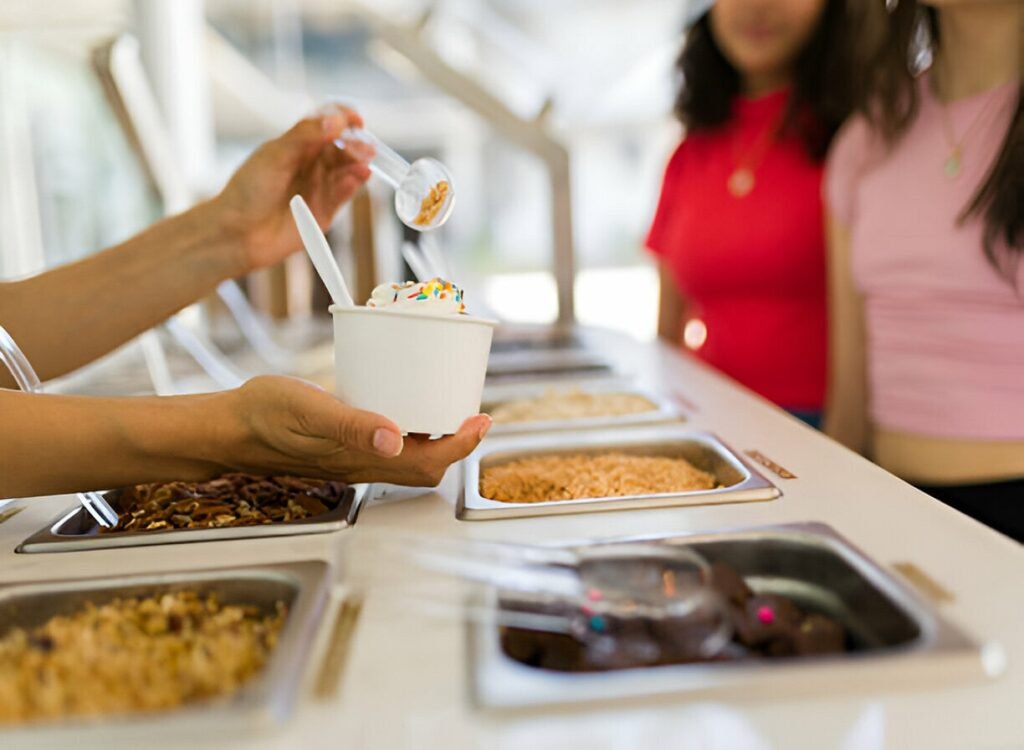
Customer Demographics
Customer demographics for an ice cream shop in Sydney are quite broad, but a few groups matter most. In Greater Sydney, young adults are a big part of the population: people aged 20 to 44 make up 39% of Sydney’s residents, and the median age is 36.8 years. This is great for ice cream because young adults often buy treats while shopping, on date nights, after dinner, and when meeting friends. Families are another key group, because parents often buy ice cream as a quick reward for kids. The Australian Bureau of Statistics shows that Greater Sydney households average 2.7 people, which supports the idea that there are many family and shared households making group purchases. Sydney also has strong spending power overall, with a median weekly household income of $2,077 in Greater Sydney (Census QuickStats), which supports both affordable options and premium flavours.
If you open closer to the CBD, you will also see more office workers and students. For example, the City of Sydney area has a median age of 34, which often means more young professionals and city lifestyle customers. Finally, tourists matter a lot in busy areas: Destination NSW reports 17.0 million visitors in the September quarter 2025 (with $8.8 billion spend), plus 3.7 million international visitors in the year ended September 2025. Tourists buy more impulse desserts, especially near beaches, harbour spots, and attractions.
Customer Groups to Target
⦁ Families with kids
⦁ Young adults (20 to 44)
⦁ Office workers
⦁ Tourists and day-trippers
⦁ Older residents (60+)
Customer Problems
Customers in Sydney usually love ice cream, but they still have a few common problems that can stop them from buying or coming back. The biggest issue right now is price and value because many people are feeling cost of living pressure and are cutting back on eating out and small treats. Another big problem is food allergies and intolerances. In Australia, food allergy affects about 1 in 10 infants and about 2 in 100 adults, and surveys suggest many people believe they have some type of food intolerance, so they want clear ingredient information and safe options. Also, on busy warm days, people can face long waiting lines, limited seating, and melted ice cream before they even start eating it.
Customer problems you should plan for:
⦁ Ice cream feels too expensive, or the portion feels small for the price, so customers look for value deals.
⦁ Allergies and intolerances (milk, nuts, gluten, eggs) make customers nervous, so they need clear ingredient info and safe choices.
⦁ Not enough diet options like dairy-free, vegan, low sugar, or lighter sorbets for people who want something “less heavy”.
⦁ Long queues and slow service during weekends, school holidays, and hot afternoons can make people walk away.
⦁ Nowhere comfortable to sit (no shade, no seating, cramped space), so families and older customers may not stay.
⦁ Ice cream melts too fast, creating a mess for kids and making takeaway difficult if packaging is weak.
⦁ Hygiene worries (sticky tables, messy floors, dirty counters) can quickly hurt trust in a dessert shop.
⦁ Opening hours do not match demand, like closing early when customers want dessert after dinner or after a beach walk.
Our Solutions
Here are simple, practical solutions for the customer problems we listed. The goal is to make your shop feel good value, safe, fast, clean, and comfortable.
Make Pricing Feel Fair: Offer 2 to 3 clear size options (small, regular, large), plus simple bundles like “2 scoops + topping” or “family pack” so customers feel they are getting value.
Handle Allergies and Build Trust: Show an easy ingredient and allergen list at the counter and on the menu. Use separate scoops for allergens (like nuts), and train staff to answer allergy questions calmly and clearly.
Add Diet-Friendly Choices: Include at least 1 to 2 dairy-free sorbets, 1 vegan option, and a low-sugar or “lighter” choice. Keep the menu simple, but make sure everyone has at least one safe option.
Reduce Long Queues: Use a simple menu board, pre-portion popular flavours during peak hours, and set up a fast “grab and go” section (single scoops, pre-packed tubs, cold drinks). A good POS system also speeds up checkout.
Improve Seating and Comfort: If space allows, add a few seats or a small bench outside. Shade is important for families. Even one or two standing tables can help customers enjoy their ice cream without rushing.
Stop Melting Mess: Use better cups, thicker napkins, and lids for takeaway. Offer waffle cups or double cups for kids. Keep takeaway packaging strong so customers can walk without spills.
Keep The Shop Very Clean: Clean tables and floors often, especially during rush hours. A clean shop builds trust quickly, and it makes customers more willing to sit and buy again.
Match Opening Hours to Demand: Stay open later on warm days and weekends, because many people want dessert after dinner or after the beach. You can also run seasonal hours (longer in summer, shorter in winter) but keep them consistent.
Marketing Strategy
A simple marketing strategy for an ice cream shop in Sydney is to focus on three things: get found easily, give people a reason to try you, and bring them back again. First, make sure locals can discover you fast by having clear street signage and a complete Google Business Profile with good photos, your menu, prices, and updated opening hours, then politely ask happy customers to leave reviews because this builds trust and improves your visibility on maps. Next, create quick “try me” offers, like a free topping weekend, a small tasting sample outside the shop, or a limited-time flavour of the week, so people feel it is worth stopping. Use short videos on Instagram and TikTok to show your best-looking scoops, thick shakes, and behind-the-scenes flavour making, and invite a few local micro food creators for a tasting so they post about you. To increase repeat customers, run a simple loyalty card (for example, buy 8 scoops get 1 free), offer family bundles, and partner with nearby gyms, schools, and cafes using a small discount code.
Finally, add delivery only if your packaging keeps ice cream cold and neat, using platforms like Uber Eats, DoorDash, or Menulog, and track what works by checking daily sales, busiest hours, and which channel brings the most customers.
Before You Open:
Pick one clear idea: family-friendly, premium gelato, or fun “Instagram-style” desserts. Keep your message simple.
Make your shop easy to find online: set up your Google listing, add photos, your menu, prices, opening hours, and your exact location.
Create a “coming soon” buzz: post short videos of flavours, shop setup, and taste testing. Keep it local with suburb hashtags.
Plan your signature items: 3 to 5 flavours and 1 “hero product” (for example a special sundae, thick shake, or waffle bowl) that people talk about.
Opening Week:
Run a simple opening offer: For example “buy 1 get 1 half price” or “free topping this weekend”. Keep it for 3 to 5 days only.
Do sampling outside: Small samples near the door pull people in fast, especially on warm afternoons.
Invite local micro influencers: Find local food creators, offer a free tasting, and ask for an honest reel or story.
Collect reviews early: Ask happy customers to leave a Google review right after they buy. Reviews help you rank and build trust.
Ongoing Weekly Plan:
Keep a Weekly Rhythm: One “flavour of the week”, one family deal, and one premium special.
Build Repeat Customers: Use a loyalty card (buy 8 scoops, get 1 free) or a points system.
Partner With Nearby Businesses: Gyms, schools, cafes, and kids activity centres. Give them a small discount code and ask them to share it.
Sell For Different Seasons: In cooler months push milkshakes, affogato-style desserts, brownies, waffles, and hot drinks.
Add Delivery Carefully: Use delivery apps for extra sales, but make sure packaging keeps it cold and neat.

Looking to start or expand your Ice Cream shops business?
With 10+ years of experience as business growth consultant, We have worked with hundreds of companies just like yours on many similar projects (helping to raise finance between £30,000 and £5 million).
Book free consultation now! to discuss your project needs and how we can help you achieve them.
Taxation
In Sydney, your ice cream shop will mainly deal with income tax, possible GST, and (if you hire staff) PAYG withholding, super, and maybe payroll tax. In simple terms, you pay tax on your profit (money in minus business costs), and you report it to the Australian Taxation Office through your tax return. If your expected turnover reaches AUD $75,000+, you must register for GST and usually add 10% GST to your prices, then report and pay it through a BAS (often quarterly). If the ATO puts you into PAYG instalments, you make smaller prepayments during the year instead of one big tax bill at the end. If you hire employees, you must register for PAYG withholding and withhold tax from wages, and you must also pay super guarantee, which is 12% for the 2025–26 financial year. In NSW, payroll tax can apply if your wages are high (the full NSW annual threshold is $1,200,000 and the rate is 5.45%, with rules if you employ across states), managed by Revenue NSW. Finally, keep good records (sales, invoices, wages, receipts) because most business records must be kept for 5 years.
For more info please visit below link:
https://www.ato.gov.au/businesses-and-organisations/income-deductions-and-concessions/
Conclusion
Starting an ice cream shop in Sydney can be a great business if you plan it step by step and keep things simple. The city has strong foot traffic, a mix of locals and tourists, and warm weather that supports sales for most of the year. The key is to choose the right location, understand your customers, and control your costs from the beginning. If you focus on good flavours, fast service, clean presentation, and friendly staff, people will come back again and again. So with a smart plan and consistent quality, your ice cream shop can grow from a simple idea into a local favourite in Sydney.
Frequently Asked Questions (FAQs)
A
When picking a spot for your ice cream shop, think about foot traffic, accessibility, competition, climate, parking, lease terms, and infrastructure. Opt for high-traffic areas near tourist spots or commercial districts, ideally with outdoor seating.
A
To differentiate from competitors, unique flavors, signature creations, local influences, and great customer experiences. Think about menu variety, customization, themed promotions, and community involvement to make your shop distinct.
A
Leverage websites and social media for menu showcases, customer engagement, and promotions. Partner with local influencers, join events, give discounts, and use striking signage to boost visibility and draw in customers.
A
Create clear SOPs, train staff well, manage inventory and equipment, follow food safety rules, streamline workflow, ensure quality, handle finances wisely, deliver great service, and comply with local laws.
A
Initial expenses cover rent, renovation, equipment, inventory, permits, marketing, salaries, utilities, insurance, and miscellany. Plan your budget meticulously, including contingencies, to minimize risks and ensure a smooth start.